
UB-621
Subcutaneous injection formulation
Fully human first-in-class monoclonal antibody
UB-621
Product Description

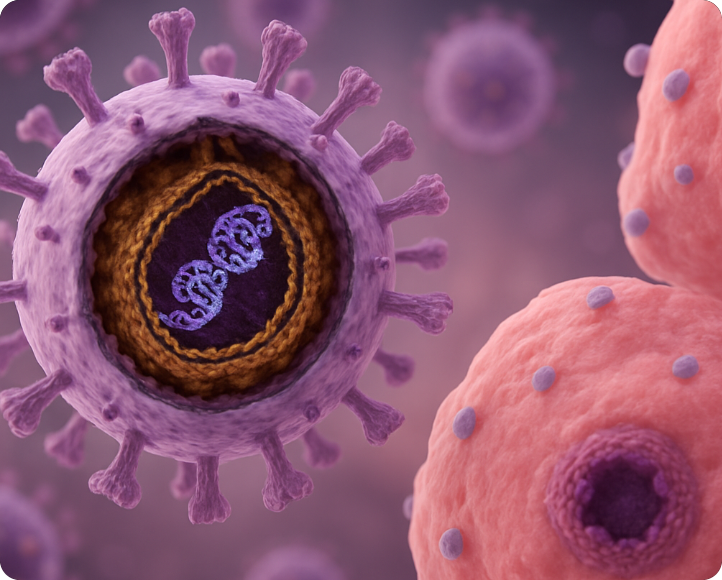
UB-621 is a fully human, original monoclonal antibody formulated for subcutaneous injection, developed for the treatment of human herpes simplex virus (HSV) infections.

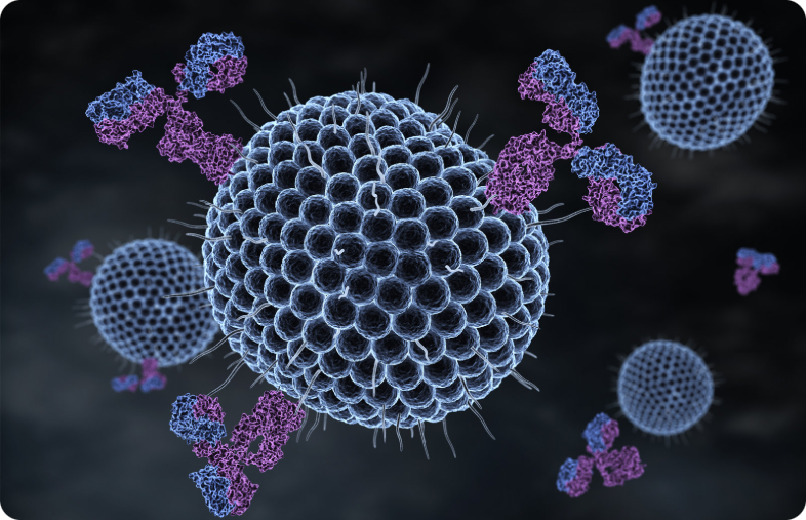
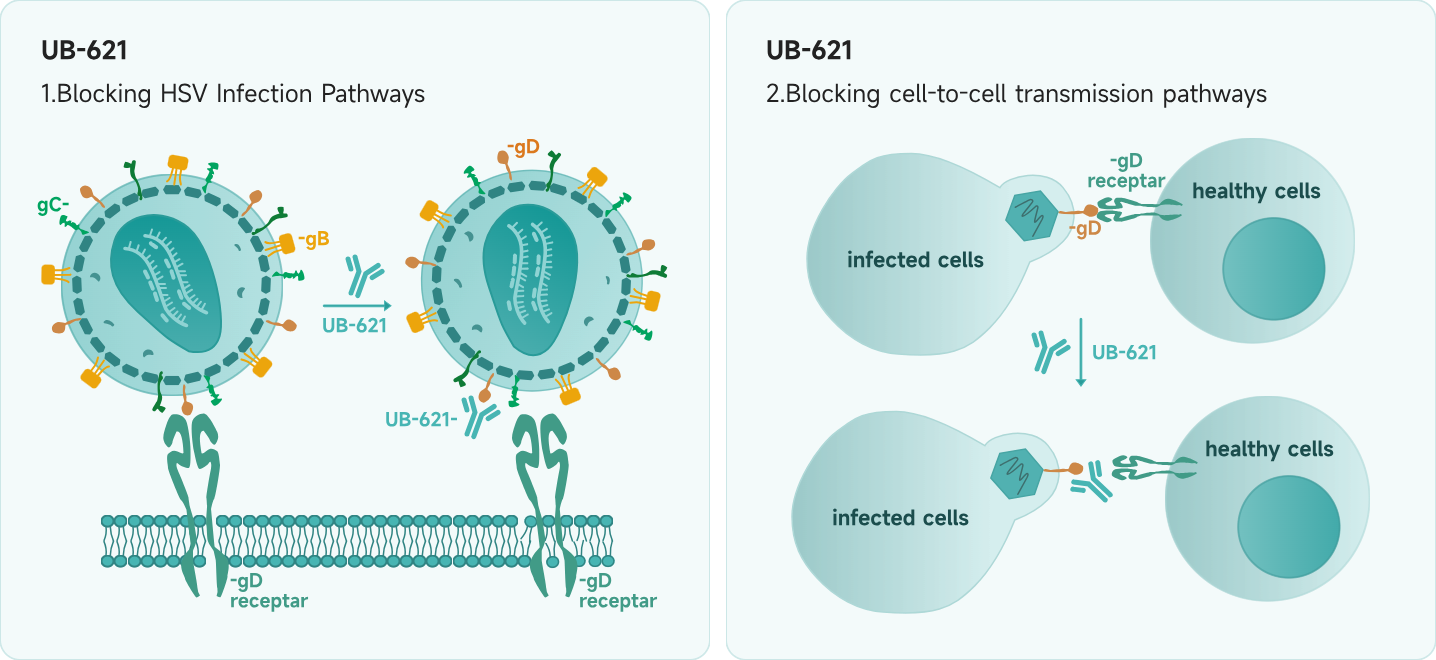
Unlike traditional small-molecule antiviral drugs, UB-621 specifically binds to glycoprotein D on the viral envelope, blocking the interaction between the virus and host cell receptors. This prevents the virus from entering host cells and also disrupts cell-to-cell transmission of HSV. Because UB-621 targets the external pathogen directly, it does not interfere with the body's normal immune function.
UB-621
Pharmacological
Mechanism
Genital herpes virus (HSV) is transmitted through epithelial tissues and establishes latency within the nervous system. It can later reactivate and travel back to the skin or mucosa, causing recurrent outbreaks — a common issue for most patients. UB-621 works by binding specifically to glycoprotein D (gD) on the herpes virus. This binding directly interferes with the virus’s ability to attach to human cells and inhibits its capacity to spread within tissues, thereby suppressing infectivity.
UB-621
Current Disease
Landscape
Genital herpes currently affects nearly 500 million people worldwide, with approximately 180 million cases in China alone. The annual growth rate is around 0.7%.Current treatment mainly relies on conventional antiviral drugs to relieve symptoms, but the suppressive effect is limited and recurrences are common. Approximately 13–15% of patients experience more than six recurrences per year. Patients are often required to take daily medication continuously, which significantly impacts their quality of life.
  • 5billion
    Global population distribution of genital herpes
  • 180million patients
    Population affected domestically
  • 0.7%
    Annual growth rate of patients
Challenges of Conventional Therapies for Genital Herpes:
  • Oral and topical treatments show variable efficacy among individuals
  • Poor effectiveness against known viral mutants
  • Unable to prevent symptom recurrence
  • Require continuous daily dosing without interruption
  • Associated side effects include nausea, headaches, hallucinations, generalized seizures, etc.
  • Cannot achieve complete cure
Currently, there are no available medications on the market that can effectively eradicate recurrent genital herpes
UB-621
Product Overview

UB-621 is a breakthrough innovative monoclonal antibody that makes the suppression of genital herpes recurrence possible.

Efficacy Comparison of UB-621 and Conventional Drug Acyclovir in Mouse Models:
UB-621
  • UB-621 as a monotherapy demonstrated consistent therapeutic effects
  • Significantly reduced recurrence frequency
  • Effective with dosing once every 4 weeks
  • Achieved 100% survival rate in animal studies
  • Potential to achieve complete cure
UB-621
Product Advantages

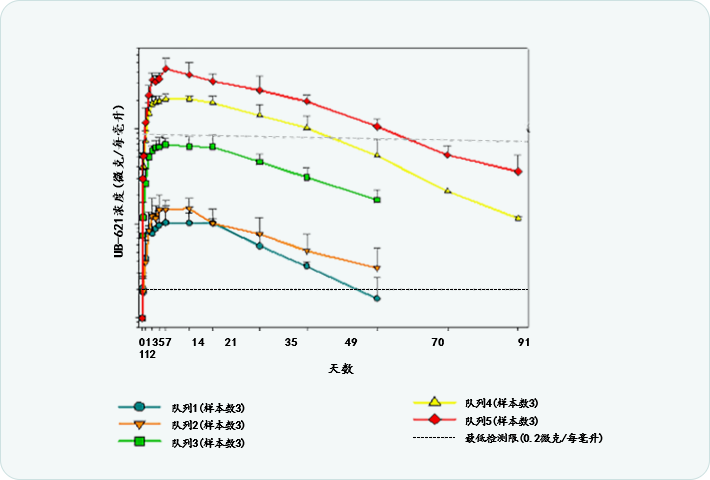
Phase I clinical data demonstrated an excellent safety profile, with all three adverse events reported during the trial related only to injection site reactions such as redness and itching.
Cohort Clinical Trial Event Summary
Adverse Events Serious Adverse Events Dose-Limiting Toxicity Anti-Drug Antibodies
Cohort 1
(0.1 mg/kg)
0 0 0 0
Cohort 2
(0.3 mg/kg)
0 0 0 0
Cohort 3
(1 mg/kg)
0 0 0 0
Cohort 4
(3 mg/kg)
2 0 0 0
Cohort 5
(5 mg/kg)
1 0 0 0
Based on the trial data, doses of UB-621 at 3 mg or higher can maintain therapeutic effects for up to two months, demonstrating the potential for developing a long-acting dosing regimen.
Dose
(mg/kg)
Half-life
  (days)
0.1 23.2
0.3 28.2
1 26
3 25.7
5 23.5
UB-621
Indication Potential
Additional Therapeutic Potentials:
  • Recurrent genital herpes
  • Drug-resistant HSV-1 and HSV-2 infections
  • Vertical transmission of herpes simplex virus type 2 (HSV-2) from mother to child
  • Herpes keratitis caused by HSV-1